
For construction companies and ready-mix providers across South America, the process of acquiring industrial machinery often begins with a budget spreadsheet. In a highly competitive economic landscape, the pressure to minimize capital expenditure is intense. However, focusing solely on the initial “sticker price” is a high-risk strategy that frequently leads to inflated operational costs and premature equipment failure. For those investing in concrete plants in Chile(plantas de hormigón en Chile), the decision-making process must extend far beyond the lowest bid to ensure long-term profitability.
The unique geographical and regulatory landscape of the Southern Cone demands a more nuanced evaluation of any concrete plant. From the seismic requirements of the Andes to the logistical challenges of the Atacama Desert, selecting the right equipment involves looking deep into technical specifications and regional support structures. This article explores the critical factors that Chilean customers often overlook when browsing a concrete plant for sale and why these details are vital for a sustainable operation.
Whether your project requires a stationary installation or a portable concrete batching plant, understanding the total cost of ownership (TCO) is the only way to protect your investment. Below are the primary technical and operational criteria that should carry as much weight as the purchase price.
Seismic Resilience and Structural Integrity
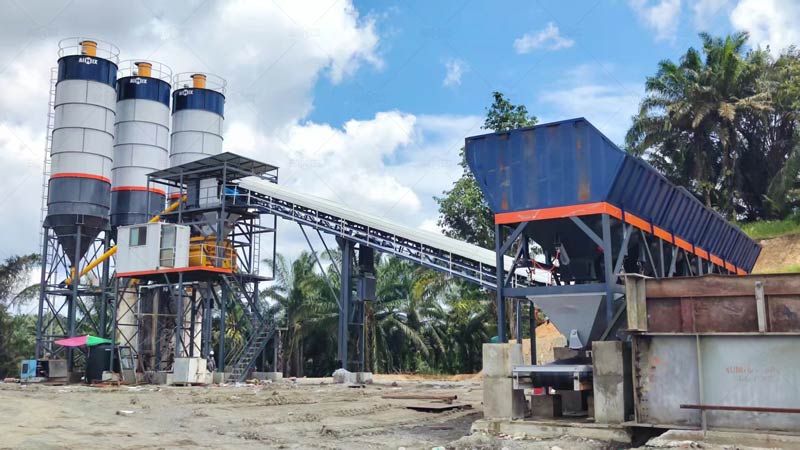
Chile is one of the most seismically active countries in the world. Any industrial structure installed between Arica and Punta Arenas must comply with strict national standards, specifically the NCh433 and NCh2369 codes for seismic design. Many low-cost international manufacturers offer standard structures designed for stable geographical regions, which can be a recipe for disaster in the local market.
A concrete mixing plant(planta concretera) that lacks the necessary seismic bracing, oversized base plates, or high-strength foundation bolts may fail during a tremor, leading to catastrophic property damage and safety risks. When evaluating concrete plants in Chile, buyers must verify that the engineering calculations are specifically certified for the seismic zone of the installation site. Cutting corners on steel thickness or structural reinforcement to save on the initial price is a mistake that cannot be corrected once the plant is standing.
Mobility Requirements vs. Production Stability
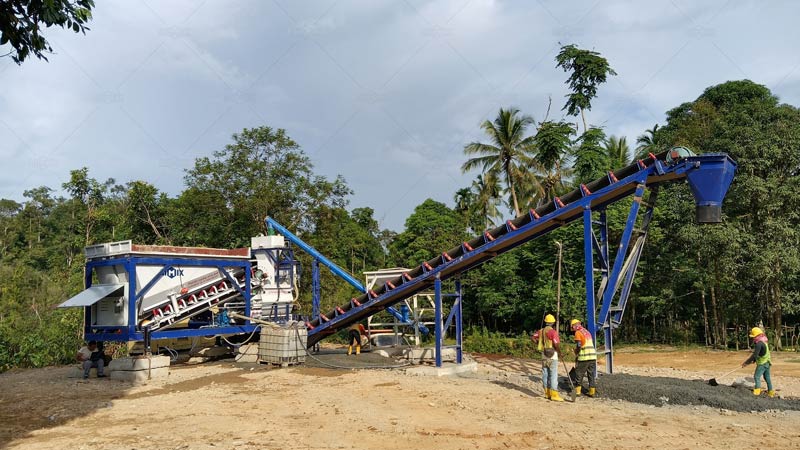
The geography of Chile is long and fragmented, often requiring construction teams to move equipment across vast distances for infrastructure projects. This has led to a significant interest in the portable concrete batching plant. However, customers often overlook the trade-off between extreme mobility and long-term production stability.
A common pitfall is selecting a highly mobile unit for a multi-year urban project simply because the setup is perceived as easier. While a portable concrete batching plant offers rapid deployment, it may have smaller aggregate bins or less sophisticated weighing sensors than a stationary counterpart. Conversely, choosing a stationary plant for a short-term road project leads to massive decommissioning costs. The choice should be dictated by your five-year project pipeline, not just the convenience of the current month’s setup.
Environmental Compliance and Automation
Modern concrete plants in Chile are under increasing scrutiny from environmental authorities (SMA). Dust emissions, noise pollution, and water recycling are no longer optional “add-ons” but legal requirements for operating permits. Many buyers overlook the sophistication of the plant’s control system and its ability to manage these environmental factors automatically.
A high-quality concrete plant should feature an automated control interface that manages the pulse-jet dust collection systems and precise water-cement ratios. Furthermore, the “openness” of the software is crucial. If a plant uses a proprietary, closed-loop system, the owner becomes tethered to a single foreign supplier for every update. Chilean buyers should prioritize systems that allow for remote diagnostics, as many job sites are located hours away from major hubs like Santiago or Concepción.
After-Sales Support and Component Origin
The abrasive nature of local aggregates—often sourced from volcanic regions—puts immense strain on mixers and conveyor belts. If a concrete plant for sale(venta de planta de hormigón) is equipped with generic, unbranded motors or bearings, finding replacements in the local market becomes a logistical nightmare.
Smart buyers look for “Global-Local” integration. This means the plant is designed by an international expert but fitted with globally recognized components (such as Siemens, Schneider, or SKF) that are readily available in local industrial supply stores. Relying on a manufacturer that lacks a local technical representative or a stocked warehouse in the region can result in weeks of downtime for a minor sensor failure, effectively wiping out any savings achieved during the purchase.
Environmental Adaptability: Coastal to High-Altitude
A machine operating in the port of San Antonio faces different challenges than one in the high-altitude mines of the north. Saline air causes rapid corrosion, while high-altitude environments can cause standard electric motors to overheat due to the thin air. Chilean customers often fail to specify these environmental extremes when looking for a concrete plant for sale. A machine that is not properly “tropicalized” or treated with marine-grade anti-corrosive coatings will see its resale value and operational efficiency plummet within just a few years.
Investing in Reliability
In the Chilean construction sector, the most expensive equipment is the one that is not running. While the concrete plant with the lowest price may win the initial tender, it is rarely the one that generates the highest long-term profit. By prioritizing seismic safety, environmental compliance, local component availability, and the specific mobility needs of the project, firms can secure an asset that lasts for decades.
Whether you are investing in large-scale concrete plants in Chile for the capital or a portable concrete batching plant(una planta dosificadora de concreto portátil) for regional development, remember that quality and support are the true drivers of ROI. The goal is to secure a reliable partner for Chile’s infrastructure growth, where performance is measured over years, not just the day the contract is signed.