
The mountainous gold mining regions of Colombia and Brazil hold vast mineral reserves, yet many operations struggle with severe logistical bottlenecks. High up in the Andes or deep within rugged interior ranges, miners face a double predicament: heavy fixed equipment cannot easily enter the remote sites, and raw gold ore cannot be efficiently transported out. Narrow dirt trails, steep gradients, unpredictable mudslides, and dense rainforest terrain make traditional infrastructure installation prohibitively expensive and time-consuming.
To break this physical deadlock, forward-thinking mining operators are turning to high-mobility processing technology. Deploying a tracked portable stone crusher(trituradora de piedra portátil) directly at the mine face allows operators to bypass complex civil works and heavy road construction. By crushing gold ore right where it is extracted, mining companies transform bulky, unmanageable boulders into uniformly sized aggregate that can be easily conveyed or hauled down steep mountain passes, turning previously inaccessible deposits into profitable ventures.
The Transport Deadlock in Mountain Gold Mining
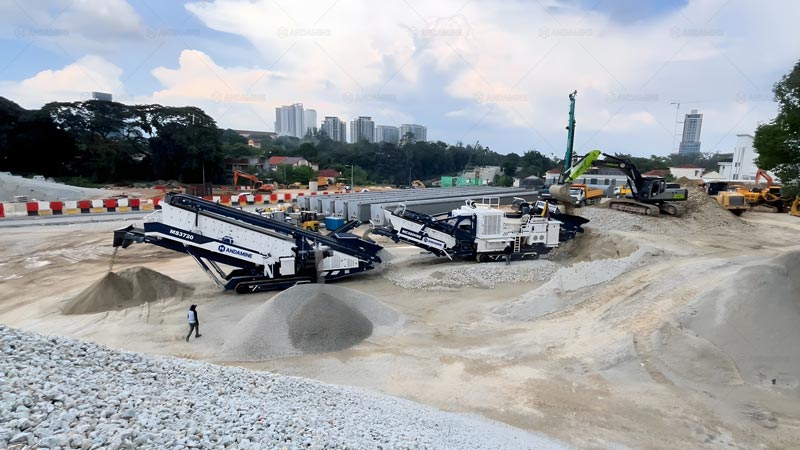
Traditional mining models rely heavily on large, stationary crushing lines built on reinforced concrete foundations. In the remote mountain ranges of Colombia and Brazil, establishing such a facility poses immense challenges. Moving thousands of tons of concrete and heavy steel structures up unpaved mountain roads requires heavy transport vehicles that often cannot navigate sharp switchbacks or soft, muddy soil conditions.
Conversely, attempting to transport uncrushed, raw gold ore from high-altitude pits down to distant lowland processing plants creates massive transport inefficiencies. Hauling large chunks of raw rock wastes fuel, damages truck beds, and severely limits daily tonnage outputs, quickly draining the profitability of high-grade gold veins.
Key Geographical and Operational Obstacles
- Impassable Terrain: Steep inclines, tight mountain bends, and unpaved roads prevent traditional heavy lowbed trailers from reaching pit locations.
- High Civil Engineering Costs: Pouring concrete foundations on unstable mountain slopes requires excessive capital expenditure and long installation periods.
- Severe Weather Risks: Heavy seasonal rains cause landslides and washouts, frequently cutting off fixed plants from raw material supply lines.
- Freight Overhead: Transporting uncrushed ore means paying high freight costs for dead weight and air pockets between large boulders.
Unlocking Access: How Mobile Units Conquer Remote Veins
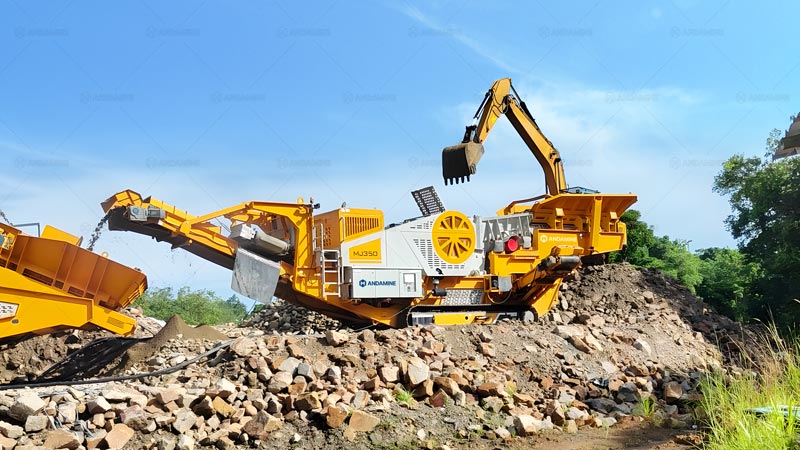
Tracked mobile crushing systems offer a self-propelled solution designed specifically for rough terrain. Equipped with heavy-duty crawler tracks, these machines can climb steep gradients, cross muddy terrain, and position themselves directly alongside the working mine face without requiring prepared concrete pads or permanent site infrastructure.
Instead of investing millions in building a stationary stone crushing plant(planta chancadora de piedra) at the base of a mountain, mine operators can simply walk a tracked mobile unit directly onto the site. This flexibility completely alters project economics, enabling rapid commissioning within hours of arrival and allowing the equipment to follow the moving extraction face as the mine expands.
| Operational Parameter | Traditional Fixed Plant | Tracked Mobile Unit |
|---|---|---|
| Site Preparation | Extensive concrete foundations required | Zero foundation work; direct setup on rough ground |
| Relocation Capability | Fixed location; non-relocatable | Self-propelled tracking; easily moves with mine face |
| Transport Efficiency | High cost to haul uncrushed ore down slopes | In-pit crushing reduces material size before haulage |
| Commissioning Time | Several months for foundation and assembly | Immediate setup and operation upon delivery |
Core Processing Technology: Choosing the Right Crushing Stage
Gold ore in Colombian and Brazilian mountain deposits is often exceptionally hard and abrasive. Processing this material on-site requires robust machinery capable of delivering high primary reduction ratios under continuous heavy loads.
A well-configured mobile stone crushing plant integrates specialized primary feed hoppers, heavy-duty grizzly screeners, and rugged crushing chambers mounted on a unified tracked chassis. This self-contained setup guarantees reliable material processing even in isolation from central power grids when paired with onboard diesel-electric generator sets.
The Essential Role of the Primary Jaw Crusher
For primary ore reduction in rugged mountain conditions, no machine matches the strength and reliability of a heavy-duty jaw crusher(chancadora de mandíbulade alta resistencia):
- High Hardness Resistance: Gold-bearing quartz veins present intense compressive strength. A robust jaw crusher handles tough, abrasive rock feeds without excessive mechanical fatigue.
- Large Feed Opening: The wide intake opening of a primary jaw crusher accepts large boulders straight from blasting or excavator buckets, eliminating the need for manual secondary breaking in the pit.
- Simple Maintenance: Featuring fewer complex moving parts than rotary impactors or gyratory systems, a jaw crusher allows remote mine workers to perform routine jaw plate replacements and gap adjustments quickly with basic tools.
- Uniform Product Output: Producing a consistent primary aggregate size ensures downstream conveyor systems or secondary crushing circuits run smoothly without clogging.
Evaluating Investment Factors: Balancing CapEx and Operational ROI
When evaluating new mining machinery for remote Latin American gold projects, operators must weigh initial capital outlay against long-term transport savings. While a high-quality portable stone crusher requires upfront capital investment, its ability to immediately eliminate ore transportation bottlenecks yields rapid returns.
Understanding the full market range for a stone crusher price(trituradora de piedra precio) involves examining machine capacity, chassis durability, power efficiency, and wear-part longevity. While a low initial stone crusher price might appear attractive, remote mountain environments demand rugged construction and reliable component support; equipment failures deep in mountain ranges lead to costly downtime if spare parts are inaccessible.
Factoring in the savings from eliminated road construction, reduced truck fuel consumption, and lower site civil works demonstrates that investing in an integrated mobile stone crushing plant delivers a significantly lower total cost of ownership over the life of a mountain mining site.
Transforming Mountain Gold Logistics
By replacing rigid infrastructure with flexible tracked equipment, mine operators across Colombia and Brazil are overcoming historic logistical barriers. Utilizing a heavy-duty portable stone crusher powered by a primary jaw crusher turns isolated mountain gold deposits into highly profitable, operational assets. As modular mining technology continues to advance, tracked mobile units will remain the primary key to unlocking high-grade reserves across the most challenging terrains of Latin America.