
Boundary wall construction and residential extensions are common building activities across Tanzania, from expanding residential properties in Dar es Salaam to new housing developments in Dodoma, Arusha, Mwanza, and smaller regional towns. Although these projects may not require the concrete volumes associated with commercial buildings or major infrastructure, they still demand a dependable supply of concrete for foundations, columns, beams, floor slabs, and masonry support structures. Relying entirely on ready-mixed concrete suppliers can be impractical when construction sites are located far from commercial batching facilities or when concrete is needed in relatively small quantities over several working days.
On-site concrete production offers an alternative by allowing contractors to prepare concrete closer to the actual construction area. Instead of arranging repeated deliveries from an external supplier, construction teams can control mixing schedules according to daily progress. This approach is particularly relevant for projects involving multiple boundary wall sections, phased house extensions, remote residential plots, and properties with restricted vehicle access. However, successful implementation depends on selecting appropriate self loader concrete mixer equipment, managing raw materials, maintaining consistent mix proportions, and matching daily production capacity with actual construction requirements.
Why Residential Contractors in Tanzania Need On-Site Concrete Production
Overcoming Ready-Mixed Concrete Delivery Limitations
Ready-mixed concrete is practical for projects with substantial, concentrated demand. However, boundary walls and residential extensions often involve intermittent concrete requirements. A contractor may need concrete for foundation excavation and casting on one day, followed by column bases several days later and lintels or a small slab at a later stage.
Ordering external deliveries for these separate operations can create logistical complications. Minimum order quantities, delivery availability, transportation distances, and concrete scheduling may not align with the construction sequence. Delays can also interrupt reinforcement work, formwork preparation, and masonry activities.
On-site production allows contractors to prepare smaller batches when required. This is particularly useful for residential projects outside major urban supply networks, where arranging frequent ready-mixed deliveries may be inconvenient.
Supporting Construction Across Different Residential Locations
Tanzania’s construction conditions vary considerably. Urban residential developments around Dar es Salaam may face congested access roads and limited working space, while projects in rural districts may encounter longer material transportation distances and less developed road infrastructure.
For contractors handling several residential properties, producing concrete near the work area can simplify daily operations. It also provides greater flexibility when construction schedules change because of weather, labor availability, or material deliveries.
Identify Concrete Requirements for Boundary Walls and House Extensions
Calculate Concrete Volumes for Different Structural Components
Before selecting equipment, contractors should estimate the concrete volume required for each construction activity.
Boundary walls commonly require concrete for strip foundations, isolated column bases, reinforced concrete columns, and connecting beams. Residential extensions may additionally involve floor slabs, staircases, lintels, and roof-supporting structural members.
For example, a 50-meter boundary wall with a foundation measuring 0.4 m wide and 0.3 m deep requires approximately 6 m³ of concrete for the foundation alone, excluding columns and additional structural components.
Breaking the total requirement into individual construction stages helps contractors estimate daily production demand rather than selecting machinery based solely on the project’s overall concrete volume.
Account for Intermittent and Phased Construction Work
Unlike continuous commercial concrete production, residential construction frequently involves gaps between pouring activities. A contractor might complete foundation concrete in the first week, spend several days installing reinforcement and formwork, and resume concrete production for columns afterward.
Equipment selection should therefore consider both production capacity and operational flexibility. A machine that can handle changing daily workloads may be more appropriate than a large installation designed for continuous output.
Select Suitable Equipment for On-Site Concrete Mixing
Consider Self-Loading Concrete Mixers for Independent Production
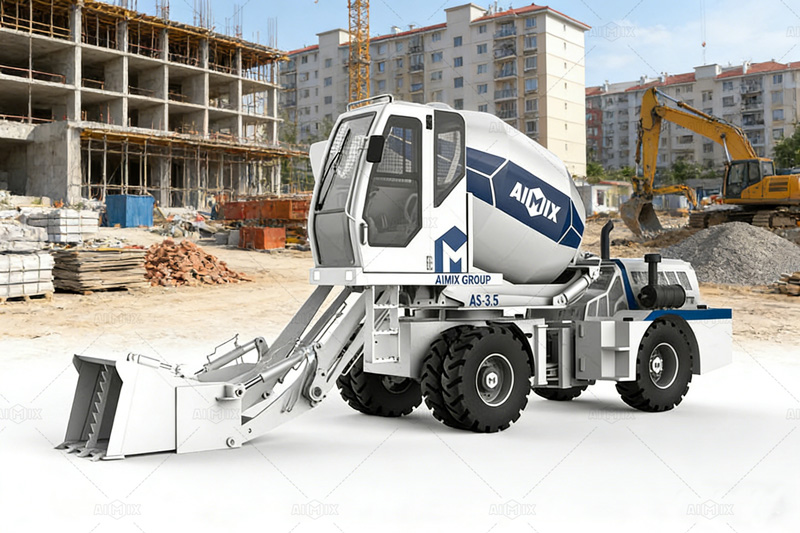
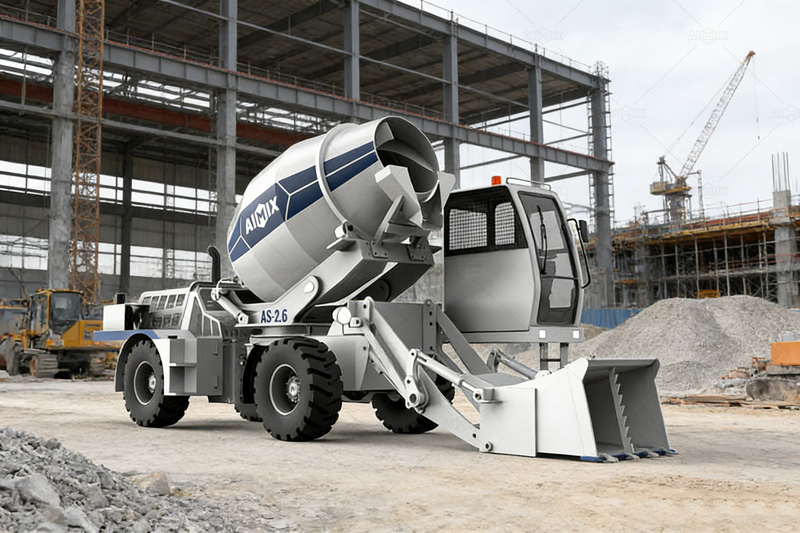
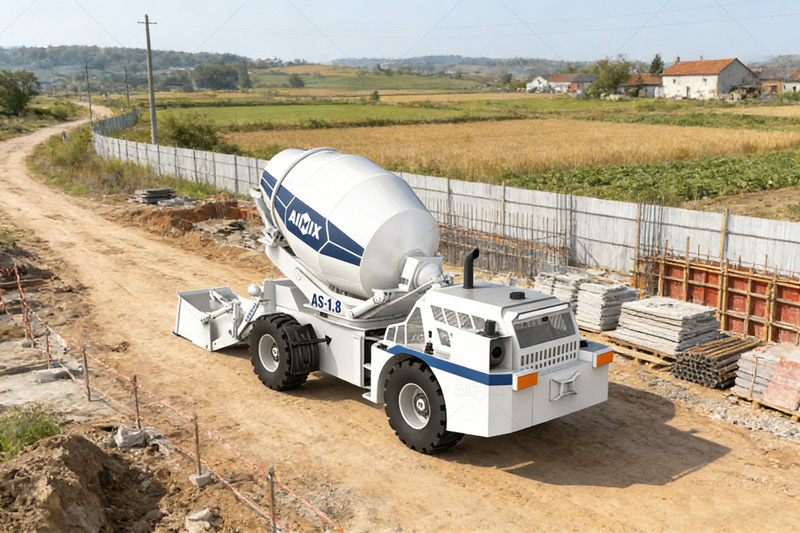
A self-loading mixer combines material loading, weighing, mixing, transportation, and discharge functions in one machine. Its front-loading bucket collects aggregates and transfers them into the mixing drum, reducing the need for separate loading equipment on suitable projects.
For contractors managing residential developments and boundary wall construction, a self loading concrete mixer in Tanzania can provide a flexible production arrangement. The machine can move around a construction site, prepare concrete in batches, and discharge it close to the required placement area.
This integrated configuration is particularly relevant when projects involve several working locations or when the contractor wants to reduce dependence on separate loaders, mixers, and material-handling arrangements.
Compare Integrated and Conventional Mixing Arrangements
A conventional arrangement may include a stationary mixer, separate aggregate loading equipment, material storage areas, and wheelbarrows or other transportation tools. This can be sufficient for small projects with predictable production requirements and convenient material access.
A self-loading configuration consolidates several operations into one machine. However, contractors should consider the additional purchase investment, maintenance requirements, operating skills, and accessibility of the construction site.
The choice depends on the frequency of concrete production, the number of projects handled, and the extent to which equipment mobility can improve daily operations.
Match Mixer Capacity with Project Size and Daily Workload
Choose Production Capacity Based on Actual Demand
Not every boundary wall or house extension requires a high-output mixing machine. Contractors should calculate the average daily concrete requirement and consider the time available for mixing and placement.
Smaller projects involving short foundation sections, individual columns, or minor residential modifications may be adequately served by compact mixing equipment. Contractors handling multiple houses, longer boundary walls, or larger residential developments may require a higher production capacity.
A self loading concrete mixer machine should be evaluated according to its effective mixing output, bucket capacity, drum configuration, discharge arrangement, and operating cycle rather than its nominal drum volume alone.
Consider Future Projects and Equipment Utilization
Equipment investment should not be based exclusively on one construction contract. Contractors who regularly undertake boundary walls, residential extensions, small commercial buildings, and rural property developments may benefit from equipment that can serve different projects throughout the year.
For example, a machine purchased for a residential extension project could subsequently be deployed for foundation construction, drainage structures, small access roads, or other concrete-related activities.
The expected annual operating hours are therefore an important part of the selection process.
Organize Raw Materials and Control Concrete Quality
Maintain Consistent Cement and Aggregate Proportions
On-site production requires disciplined material management. Contractors should arrange designated storage areas for cement, sand, coarse aggregates, and water to prevent contamination and unnecessary material losses.
Aggregate grading and moisture content influence the actual water requirement. If sand becomes wetter after rainfall, its moisture contribution must be considered when adjusting the mixing water.
Concrete proportions should follow the structural engineer’s approved mix design. Foundations, reinforced columns, and suspended slabs may have different strength and durability requirements. A single nominal mixing ratio should not automatically be applied to every structural component.
Account for Tanzania’s Weather Conditions
Temperature and rainfall can affect concrete production and placement. During hot and dry periods, rapid moisture loss may reduce workability and complicate finishing. During rainy periods, wet aggregates can alter the effective water-cement ratio.
Contractors should protect cement from moisture, maintain suitable aggregate storage, and adjust production procedures according to actual site conditions. Fresh concrete should also be placed and cured using methods appropriate to the project specifications.
Improve Construction Productivity Through Flexible Production Scheduling
Coordinate Concrete Mixing with Formwork and Reinforcement
Concrete production should follow the readiness of each structural section. Before mixing begins, contractors should confirm that excavation, formwork, reinforcement, and embedded components have been inspected and approved.
This prevents concrete from being produced too early and left waiting for placement. It also reduces unnecessary interruptions between successive batches.
For boundary wall construction, mixing can be organized according to foundation sections or groups of columns. For residential extensions, production can follow the sequence of foundation, structural frame, floor slab, and other concrete elements.
Reduce Unnecessary Material Handling
The distance between the mixing position and the pouring location influences labor requirements and placement efficiency. A mobile mixing arrangement can reduce repeated movement of fresh concrete across a construction site.
However, site access, ground conditions, turning space, and discharge height must be assessed before positioning the machine. Efficient equipment placement helps minimize handling time while maintaining suitable concrete quality.
Evaluate Equipment Investment and Long-Term Operating Requirements
Compare Purchase Price with Total Operating Costs
When searching for a large concrete mixer for sale in Tanzania, contractors should look beyond the initial equipment quotation. The overall investment includes transportation, import-related expenses where applicable, fuel, routine servicing, spare parts, operator costs, and expected maintenance.
A conventional mixer may have a lower purchase price, while an integrated self-loading mixer involves a higher initial investment but combines several material-handling and mixing functions.
The appropriate option depends on equipment utilization, project frequency, labor arrangements, and the cost of alternative concrete supply methods.
Check Maintenance Support and Spare Parts Availability
Before purchasing, contractors should examine engine specifications, hydraulic components, weighing systems, tire availability, and the accessibility of routine maintenance parts.
Supplier support is another important consideration. Technical documentation, operator training, troubleshooting assistance, and spare-parts arrangements can influence equipment availability over its service life.
For contractors operating outside major Tanzanian cities, reliable maintenance planning is particularly important because equipment downtime can affect several ongoing construction activities.
Conclusion
On-site concrete production provides residential contractors in Tanzania with an alternative to repeated ready-mixed concrete deliveries, particularly for boundary walls, house extensions, and phased residential developments. Its practicality depends on project volume, daily production requirements, site accessibility, raw material availability, and concrete quality-control procedures.
Self-loading concrete mixers can simplify material handling and batch production by combining several operations into one machine. Nevertheless, equipment capacity and configuration should match actual construction demand. With appropriate machinery, disciplined batching, and coordinated placement schedules, contractors can manage small and medium-sized concrete works with greater flexibility and control.