
Why can two concrete batching plants with the same rated output deliver different amounts of concrete during an actual working shift? The difference often comes from their configuration, operating cycles, material supply, and site conditions. When evaluating a concrete plant, buyers should look beyond the advertised hourly capacity and understand how each production stage affects finished output. This is particularly important when choosing a mini concrete plant for smaller projects or planning a commercial production facility.
Rated Capacity and Actual Production Output
The rated capacity of a concrete batching plant(planta de hormigón) refers to its theoretical hourly production under specified operating conditions. It is usually expressed in cubic meters per hour (m³/h). Common configurations range from 25 m³/h to 240 m³/h, depending on the plant model and equipment arrangement.
However, actual production is affected by equipment availability, material feeding, mixing cycles, and operational interruptions. A plant rated at 60 m³/h may not continuously produce 60 m³ of finished concrete every hour throughout a working shift.
For preliminary planning, actual output can be estimated using the following formula:
Actual hourly output = Rated capacity × Operating efficiency
For example, a 60 m³/h concrete plant operating at 80% efficiency may deliver approximately 48 m³/h under the assumed working conditions. This distinction helps buyers avoid selecting equipment based solely on theoretical figures.
Mixer Capacity and Mixing Cycle Duration
The mixer is one of the most important components determining production capacity. Its batch volume and operating cycle directly influence how much finished concrete can be discharged within an hour.
Mixing Volume per Batch
Concrete mixers are generally specified by their nominal output per batch. For example, an HZS50 batching plant commonly uses a JS1000 twin-shaft mixer, which has a nominal mixing capacity of 1,000 liters and a typical finished concrete output of approximately 0.5 m³ per batch.
Larger mixers can produce more concrete per cycle, but their capacity must match the feeding and weighing systems. Installing a larger mixer without upgrading supporting equipment may create bottlenecks rather than increase overall production.
Mixing and Discharge Time
Each production cycle includes aggregate and powder feeding, water and admixture addition, mixing, and concrete discharge. Longer mixing requirements reduce the number of batches completed per hour.
For instance, if a mixer produces 0.5 m³ per batch and completes 60 cycles per hour, its theoretical output is 30 m³/h. Increasing cycle efficiency can improve output, provided that concrete uniformity and the specified mixing quality remain consistent.
Material Batching and Feeding Efficiency
A concrete plant operates as a coordinated production line. Even if the mixer has sufficient capacity, insufficient material feeding can prevent it from operating continuously.
Aggregate Batching and Transportation
Aggregates usually account for the largest proportion of concrete by volume. Their storage, weighing, and transportation systems must supply the mixer at the required rate.
Important specifications include:
- Aggregate storage bin capacity and number of compartments.
- Batching machine weighing capacity and accuracy.
- Belt conveyor or skip hoist transportation speed.
- Aggregate feeding frequency and material availability.
If the aggregate conveyor cannot deliver materials quickly enough, the mixer may remain idle between batches. This reduces the actual hourly output even when the mixing equipment itself is adequately sized.
Cement, Water, and Admixture Supply
Cement screw conveyors, water pumps, and admixture dosing systems also influence production continuity. Their delivery rates should correspond to the mixer capacity and batching cycle. Inadequate cement conveying speed or slow water dosing can extend the production cycle and create unnecessary waiting time.
Control System and Production Coordination
The automatic control system determines how efficiently different components work together. A well-configured system coordinates aggregate weighing, cement feeding, water dosing, mixing, and discharge without unnecessary delays.
Several control functions can help maintain production efficiency:
- Automatic batching: Coordinates material weighing according to the selected mix design.
- Sequential operation: Controls the timing of feeding, mixing, and discharge.
- Fault monitoring: Identifies equipment abnormalities that may interrupt production.
- Production records: Tracks batch quantities, material consumption, and operating performance.
For a concrete batching plant Peru(planta dosificadora de concreto Perú) project, reliable automation can be especially useful when supplying multiple construction sites or maintaining consistent concrete quality across different production shifts. However, automation cannot compensate for insufficient mechanical capacity or poor material supply.
Plant Configuration and Site Conditions
The physical configuration of a batching plant affects how efficiently materials move through the production process. Different layouts are designed for different project durations, transportation requirements, and available installation areas.
Stationary Concrete Batching Plants
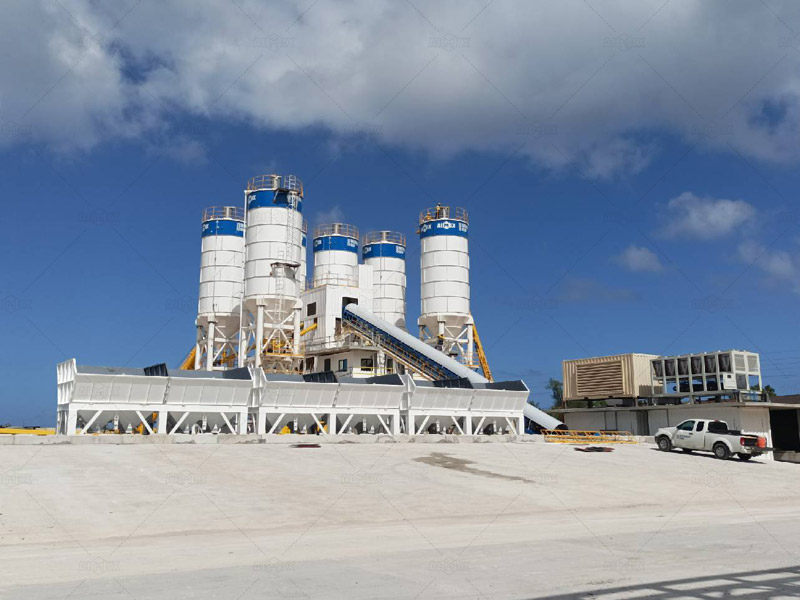
Stationary plants generally support continuous commercial production and larger hourly outputs. Their layouts can accommodate multiple aggregate bins, cement silos, belt conveyors, and larger mixers. They are suitable for long-term concrete supply operations where production demand remains relatively stable.
Mobile and Mini Concrete Plants
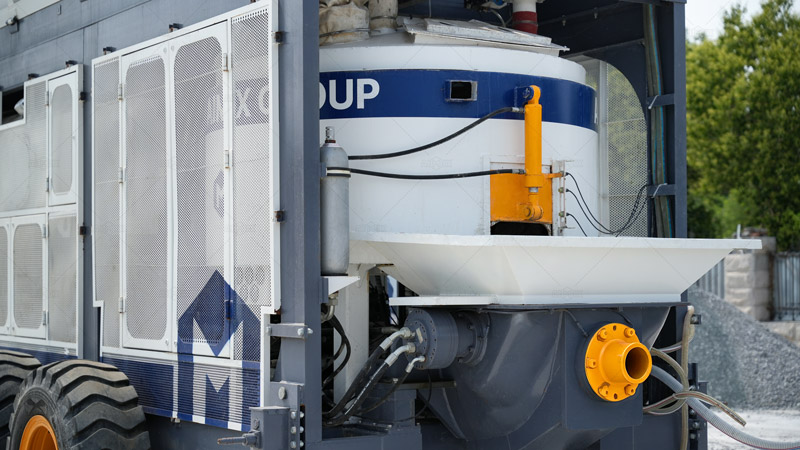
A mini concrete plant(mini planta de concreto) is designed for projects with relatively modest concrete demand and limited installation space. Its compact configuration can simplify transportation and installation, although its production capacity is generally lower than that of larger commercial plants.
Mobile configurations also offer relocation flexibility, which is valuable for contractors working on multiple construction sites. Nevertheless, buyers should evaluate actual mixer output, aggregate storage, and feeding arrangements rather than assuming that mobility automatically means higher production efficiency.
Environmental and Infrastructure Conditions
Site conditions can influence actual production through several factors:
- Altitude: High-elevation locations may affect engine performance and electrical equipment cooling requirements.
- Temperature: Extreme heat or cold can change concrete mixing and handling requirements.
- Power supply: Unstable electricity may interrupt batching and mixing operations.
- Transportation access: Difficult site access can delay aggregate replenishment and cement deliveries.
- Weather: Heavy rain may affect aggregate moisture content and material handling.
These considerations are particularly relevant when planning a concrete batching plant Peru installation in mountainous regions or remote infrastructure projects.
How to Choose a Plant Based on Production Requirements
Choosing equipment based on actual demand is more reliable than simply purchasing the highest-capacity model. Buyers should estimate peak hourly concrete consumption, daily production volume, operating hours, and expected future demand before selecting a configuration.
| Rated Capacity | Typical Project Application |
|---|---|
| 25–35 m³/h | Small construction projects and local concrete supply |
| 50–60 m³/h | Medium-sized construction and commercial production |
| 90–120 m³/h | Large infrastructure and commercial concrete supply |
| 150–240 m³/h | Major infrastructure and high-volume production |
When comparing a concrete plant for sale(planta de hormigón en venta), buyers should request a complete technical configuration rather than evaluating capacity figures alone. Mixer model, aggregate batching capacity, conveyor specifications, installed power, and control system functions should all be considered together.
Ultimately, the production capacity of a concrete batching plant depends on the performance of its entire production chain. Matching mixer output with material feeding, batching accuracy, automation, and site conditions allows buyers to achieve more reliable hourly production. Whether investing in a mini concrete plant or a large commercial facility, a balanced configuration is essential for maintaining concrete quality while meeting project delivery targets.